



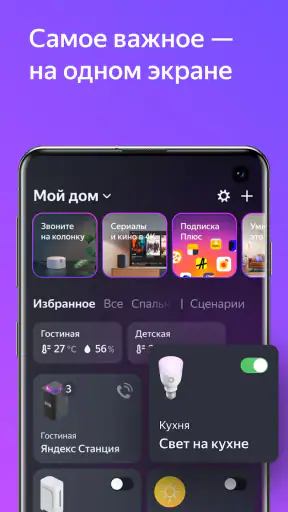



I spent time with Дом с Алисой as a home-focused app and found that its main appeal is not complexity but the way it puts Alice into an everyday household setting. It is free, aimed at everyone, and comes from Direct Cursus Computer Systems Trading LLC. The app has reached over 10 million installs and holds a 4.0 average from around 165 thousand ratings, which suggests that many people are willing to try it as a practical home companion rather than as a specialist tool.
That broad audience matters when looking at the experience through an accessibility lens. A home app should be easy to understand when I am tired, distracted, in a noisy room, or trying to complete a small task quickly. My overall impression is that this is where the product makes the strongest case for itself: it presents a familiar domestic idea instead of asking users to learn a complicated system first. At the same time, a simple concept does not automatically remove every barrier, particularly for people who depend on carefully adjustable text, strong visual contrast, or alternative ways to control an app.
How the home experience reads and guides you
The first thing I noticed is that the app’s identity is immediately understandable. The Russian short description, “Дом с Алисой,” points toward a home experience with Alice at its center, while the English-facing store summary describes it as simple and convenient. That combination sets a clear expectation: this is not an overloaded household management suite with a long setup ritual. I approached it as something intended to feel approachable from the beginning.
That clarity helps users who find unfamiliar interfaces tiring. A person who is not comfortable exploring menus can usually benefit from a product with one obvious purpose, and this app’s home framing gives the interface a recognizable mental model. Instead of treating the screen as a collection of unrelated controls, I could think about it in terms of home interaction and the role Alice plays in that environment. This is particularly useful for older family members or anyone who prefers familiar language over technical labels.
There is also a practical advantage for people who have limited attention. Household tasks are often interrupted by cooking, children, visitors, or a phone call. An app that keeps its central idea visible is easier to return to than one that hides its useful functions behind several layers. I would be more comfortable recommending it to someone who wants to explore at their own pace, because the concept does not require an advanced understanding of smart-home terminology before it becomes meaningful.
Still, readability is more than knowing what an app is for. It also depends on text size, spacing, contrast, icon clarity, and whether important actions are distinguishable without guesswork. I would not assume that every user will experience the interface equally well. People with low vision should check how comfortably the app works with their phone’s display settings before committing to it as a daily tool. If enlarged text causes labels to crowd together or if controls rely heavily on small visual elements, the otherwise friendly concept may become less comfortable.
Navigation can also feel different depending on how someone prefers to use a phone. A confident smartphone user may move through the app naturally, while a first-time user may need a quiet moment to understand where the home view ends and the next action begins. My advice is to explore it when you are not in a hurry, then establish a simple routine. Open the app from the same place, keep the most relevant screen easy to reach, and avoid trying to learn every part during a busy household moment.
The useful accessibility strength here is conceptual simplicity, not a promise that every visual or interaction need is covered. That distinction is important. A clean purpose can reduce cognitive effort, but it does not replace adjustable presentation or alternative input options. Users who need highly customized display behavior should judge the actual interface on their device rather than relying only on the app’s friendly positioning.
A realistic household routine
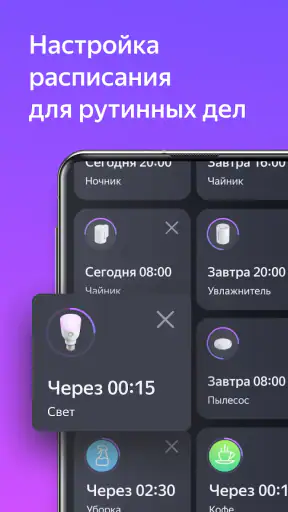
Imagine a person arriving home after work and wanting a quick, calm interaction rather than another complicated screen. They open the app, orient themselves around its home-centered design, and use Alice as part of their established routine. The value is not necessarily in spending a long time inside the app; it is in reducing the friction between deciding what to do and beginning that action.
This kind of short session can suit someone with limited concentration or a user who is managing several things at once. A parent may check the app while preparing dinner, or an older relative may use it during a quiet morning routine. In these situations, the product benefits from being understandable at a glance. I would not treat it as a replacement for every household service, but I can see why a focused home app would be less intimidating than a large collection of unrelated utilities.
For users with memory difficulties, consistency becomes especially valuable. I would recommend keeping the routine narrow at first: learn the main path, repeat it, and only then explore less familiar areas. That approach reduces the chance of a user feeling lost after an update or an accidental tap. It also makes it easier for a family member to explain the app without giving a long technical lesson.
Motor control and sensory comfort
Motor accessibility is one of the areas where expectations should remain realistic. A person with steady touch control may find ordinary navigation comfortable, but users with tremors, reduced dexterity, or difficulty with precise taps may need more room and more time. I would avoid recommending rapid repeated tapping or complicated sequences for someone who struggles with fine motor movements. A calm, deliberate workflow is a better fit.
Before relying on the app, I would test it with the phone held in the way the user normally holds it. Some people use one hand, some rest the phone on a table, and others depend on a stand. A control that feels easy while sitting at a desk may be awkward when the device is being held during a household task. This is a small but meaningful distinction: accessibility is affected by posture, grip, lighting, and attention, not just by the app’s screen design.
Users who experience sensory overload may appreciate the focused domestic theme, because it gives the experience a clear purpose instead of presenting a busy catalog of unrelated choices. However, sound and visual feedback can affect people differently. Someone sensitive to audio may prefer to use the app in a quiet, predictable way, while someone with hearing loss should not assume that every important result will be communicated in a way they can perceive easily. I would pair the app with the phone’s own visual and vibration settings where appropriate, but I would not treat those system settings as proof that every app action is equally accessible.
People with speech-related disabilities may also wonder whether Alice can be used comfortably without relying on spoken interaction. The safest way to answer that for a particular user is to try the actual tasks they care about and see whether touch interaction is sufficient. If a household routine depends on speaking clearly or quickly, the app may be less suitable for someone who cannot use voice input reliably. Conversely, if the needed actions are easy to complete through the screen, it may remain useful for a wider range of users.
This is one of the app’s important trade-offs. Its home-oriented simplicity may reduce mental load, but users with motor or sensory needs still have to verify whether the individual controls work for them. I would test the most important action several times, including in the conditions where it will really be used, rather than making a decision from a short first impression.
Using it across different situations
Situational access is where I think the app has a relatable advantage. A household app is not used only in ideal conditions. I might open it while carrying groceries, with one hand occupied, or while moving between rooms. A person with temporary limited mobility may also find ordinary phone interaction harder after an injury. In those moments, a concise home experience can be more approachable than a feature-heavy alternative.
The same applies to language and confidence. Someone who is comfortable with Russian-language household services may find the app’s identity more natural than an interface built around unfamiliar English terminology. A family can also use it as a shared point of reference: one person may introduce the app, another may handle the phone settings, and a third may use it independently once the routine is familiar.
For a user with hearing loss, a noisy kitchen, or a quiet preference, the key question is whether the app’s important interactions can be understood visually. For a user with low vision, the key question is whether the screen remains legible in dim light or glare. For a user with limited dexterity, the key question is whether the required taps can be completed without precision. These are not abstract concerns; they change from room to room and from person to person.
I would also consider privacy comfort when deciding where to use a home assistant-style app. Some people are happy to interact with household technology in shared spaces, while others prefer to keep personal requests private. That is not a flaw unique to this product, but it affects whether the app feels appropriate for a family room, bedroom, workplace, or public setting. A user who wants complete discretion may prefer a conventional touch-first utility instead.
The app is available for devices running Android 8.0 or later, so compatibility is broad enough for many existing phones, though anyone using an older device should check the system requirement before planning around it. The age classification is Everyone, which makes it easier to consider in a family environment. That classification describes suitability, not guaranteed ease of use for every child, older adult, or disabled person, so supervision and a short trial still make sense.
Where the experience still creates friction
The biggest limitation is that a simple home concept can create high expectations. Users may expect every part of the experience to be effortless, yet real accessibility depends on details such as focus order, control size, readable labels, feedback, and how well the app behaves with a particular phone. I would be cautious about presenting it as a universal solution for assisted living or independent use without observing the person who will rely on it.
Another barrier is the gap between occasional use and dependable routine use. An app can feel easy during a short demonstration but become frustrating when a user has to repeat the same action every day. If a person has memory, vision, or motor limitations, even a minor extra step can become significant over time. I recommend identifying one or two essential tasks and judging the app by those tasks first. If they are not comfortable, additional features will not solve the core problem.
Users who want extensive customization may also be happier with a more specialized smart-home platform. A broader alternative may offer deeper device control, more detailed automation, or more explicit support for different household members. That can be worthwhile for technically confident users, but it may also introduce more menus and more opportunities for confusion. In my view, the choice is not simply between good and bad; it is between a focused home experience and a more configurable system that demands more learning.
There is a similar trade-off for people who need non-touch access. A dedicated accessibility tool, a platform with strong assistive-technology integration, or a device designed around alternative controls may be a better choice than relying on a general home app. I would especially favor those options when a user cannot comfortably perform ordinary taps, cannot depend on visual feedback, or needs a carefully supported communication method.
Because the developer is Direct Cursus Computer Systems Trading LLC, users who need a particular level of support should take time to understand how the app fits into their own device ecosystem before making it central to household routines. I would install it, test it with the intended user, and keep a simple backup method for important tasks. That is sensible with any home technology, especially when another person’s independence is involved.
Who should try it, and who should look elsewhere
I think this app is a good candidate for people who want a straightforward home-oriented experience, prefer familiar everyday interactions, and do not want to begin with a complex dashboard. It may also suit families introducing a home assistant concept to someone who is cautious about technology. The free price makes experimentation easy, and the Everyone rating removes one obvious barrier for shared household use.
I would be more selective for users who need guaranteed compatibility with screen readers, highly precise keyboard navigation, large-text layouts, or alternative input devices. Those users should test the exact workflow they need rather than assuming that a simple interface will meet their requirements. Someone seeking advanced automation or a single control center for a large collection of devices may also prefer a more specialized platform.
Compared with a conventional home utility, this app feels more personal and centered on Alice. Compared with a full smart-home control system, it appears easier to approach but potentially less suitable for people who want deep configuration. That balance is its defining character. It is not trying to win by offering every possible household function; its appeal comes from making the home interaction feel less technical.
The rating of 4.0 from around 165 thousand ratings gives the app a solid, though not flawless, public reception. I read that as a reason to try it with realistic expectations rather than as a guarantee. The large install base shows that it has broad reach, but popularity cannot tell me whether the interface will work for a person with a specific disability, an older phone, or a particular sensory preference.
My inclusive verdict
After using it as a home app, I see Дом с Алисой as a friendly starting point for people who value a clear domestic focus over a complicated control center. Its strongest inclusive quality is the reduction of conceptual clutter: I can understand what kind of experience it wants to provide without studying a technical manual. That can help users with limited attention, low confidence, or a preference for familiar routines.
My recommendation comes with a practical condition. Test the app in the exact context where it will be used: standing, sitting, in bright or dim light, with one hand, in a noisy room, and with the user’s preferred accessibility settings enabled. Check whether the essential path is readable, whether feedback is noticeable, and whether the person can recover comfortably after an accidental tap. Those few minutes of testing reveal more than a general promise of simplicity.
For many households, especially those looking for a free and approachable way to explore Alice at home, I think it is worth trying. For people who require formal accessibility guarantees, highly specialized input, or extensive smart-home control, a dedicated alternative may be the safer choice. My final view is positive but measured: this is an inviting home experience, and its simplicity can genuinely help, yet inclusive use depends on the individual device, the user’s abilities, and the routine built around it.


